MMA8451Q Breakout board

Finally got some time to try out the MMA8451Q breakout board that arrived last week.

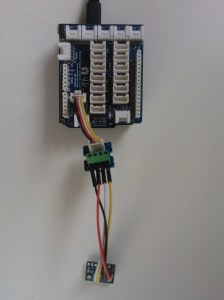
I’m using my Seeedstudio Grove Base Shield, 1 x Grove Universal 5cm cable, 1 x Grove Screw Terminal and 4 x jumper wires to build a test harness for the breakout board. Once I have got the I2C connectivity & device configuration sorted I’ll connect up the two interrupt outputs on the MMA8451Q in a similar way.

Bodged up MMA8451Q connectivity

Bodged up MMA8451Q connectivity

Netduino Plus 2

WIll be ordering a Netduino Plus 2 as soon as availability confirmed

168MHz CPU (was 48MHz)

384 KB Code storage (was 64KB)

100+KB RAM (was 42KB)

Plus other improvements, I wonder what the impact of the faster CPU on power consumption will be as I have just purchased a solar panel & battery from seeedstudio.

The extra RAM should make the QuakeZure client software a lot easier as no more mucking around with shunting data off to the SD card to save space.

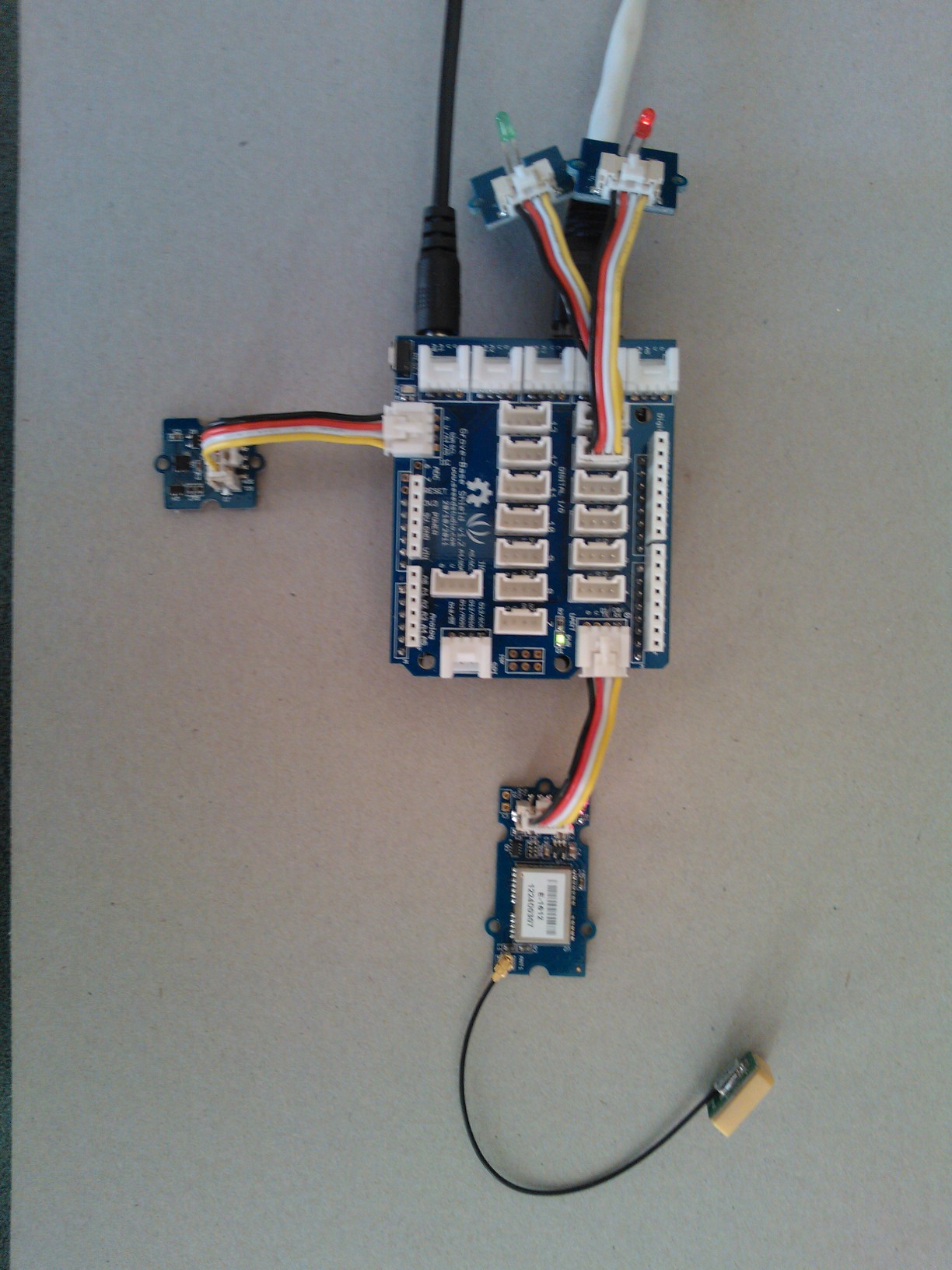
Quakezure device

This is the prototype QuakeZure device for detecting P-Waves and notifying Azure backoffice.

The kit cost about USD 120 and would get cheaper in quantity. Organisations like Seeedstudio can take a concept built with the Grove prototyping kit I used and organise production engineering of a real product from a concept if volumes are sufficient.

Netduino Plus USD 57.95
Grove Base shield USD 9.90
Grove Accelerometer USD 12.90
Grove GPS USD 39.90

I have been looking at other MEMS devices from Freescale,  ST MIcroelectronics, Analog devices, Memsic  plus a few others. The key issue is that as soon as you go beyond consumer grade accelerometers the price rapidly rises to several times the cost of the rest of the kit.

For a production system you would most probably use something like GHI G120 Module USD37.39 with a custom board with the necessary power supply, connectivity & sensors mounted on it.
PoC QuakeZure Client on my desk
Writing to an Azure Storage Queue from a Micro Framework device

In my TechEd presention I demoed writing messages into an Azure Storage Queue from a Netduino Plus. I have knocked up a couple of basic NetduinoPlus samples to show how this works. The code was inspired by these articles

http://azurestoragesamples.codeplex.com/
http://soumya.wordpress.com/2010/05/21/azure-simplified-part-5-using-rest-api-for-azure-queue-storage/
http://convective.wordpress.com/2010/08/18/examples-of-the-windows-azure-storage-services-rest-api/
http://brentdacodemonkey.wordpress.com/2009/04/16/azure-storage-%E2%80%93-hands-on-with-queues-part-1/
http://msdn.microsoft.com/en-us/magazine/jj190807.aspx

Both versions have a dependency on a third party SHA implementation (I really didn’t want to implement that myself) of which there are several available for the .Net MF. I have used ones from inControl & ElzeKool successfully.

There are two versions, one which has a dependency on the .Net MF Common extensions for basic string manipulation fuinctionality and a low dependency version which uses only what is available in the .Net MF framework.

Code is available from here